IdeaSown is a space where innovation ideas, creative solutions, and future‑focused concepts are shared freely for anyone to use, adapt, and develop. Every concept is released under Creative Commons to remove ownership barriers and accelerate open innovation for public benefit.
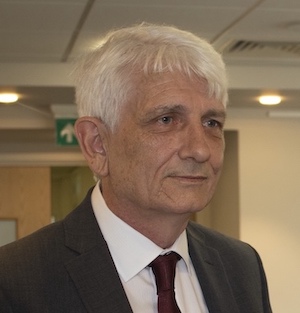
Created by Dr Patrick Reynolds, a systems level thinker developing original concepts for public use.
IdeaSown exists to make useful, well structured innovation ideas accessible to anyone working on real world challenges. Each concept is a seed. It is something sown for future thinkers, creators, and problem solvers to discover, reinterpret, and develop further. This is the purpose of IdeaSown: to release creative, cross disciplinary innovation concepts into the world, freely and without expectation, so they can grow wherever they find the right mind.
A growing library of original innovation concepts across energy, AI, materials, health, environment, social/cultural, and systems design.
Each idea on IdeaSown includes a structured summary covering the problem, solution, key benefits, intended audience, practical use cases, and a clear FAQ. Every idea also has a full concept page, where the complete architecture, reasoning, and detailed framework are presented for deeper exploration.
Every idea is saved with an internal timestamp that isn’t visible on the page. It records the original date of creation, and the timestamp can be provided if verification is ever required.
This concept is designed for teams responsible for how a website actually performs in front of real users:
This concept is designed for teams responsible for keeping a website fast, discoverable, and continuously improving without manual effort:
This concept is designed for organisations working to optimise material flows, reduce waste, and coordinate industrial processes across multiple facilities:
This concept is designed for organisations that need precise, verifiable insight into human capability at the level of real tasks, not job titles:
This concept is designed for organisations that need to guarantee the authenticity, provenance, and integrity of digital content in environments where manipulation is increasingly easy:
This concept compares two strategic pathways — a shared Croatia–BiH AI data centre versus a Trebinje‑only facility — and is designed for organisations evaluating regional digital infrastructure, energy use, and long‑term cooperation:
This concept is designed for researchers and teams working with systems that behave non‑linearly, evolve over time, or resist traditional analytical approaches:
This concept is designed for teams that need to explore evolving scenarios, test decisions, and model complex systems that change over time:
This concept is designed for organisations exploring theoretical physics, cosmology, and higher‑dimensional models that reinterpret dark matter and dark energy as geometric phenomena:
This concept is designed for organisations exploring gravitational theory, anomaly interpretation, and large‑scale structural models that treat unexplained phenomena as signatures of deeper geometric frameworks:
This concept is designed for organisations developing advanced exoplanet‑assessment frameworks that combine geometric modelling, environmental dynamics, and long‑term habitability analysis:
This concept is designed for organisations exploring theoretical physics, cosmology, and higher dimensional models that interpret dark matter, dark energy, and gravitational anomalies as geometric behaviour originating from deeper curvature fields. It explains how a topographical map of higher dimensional gravity can be constructed and how geometric imprints reveal the structure of the bulk.
This framework is designed for organisations and research groups working at the intersection of physics, biophysics, and complex‑systems modelling:
This concept is designed for organisations developing next‑generation computing architectures that reduce energy consumption, improve thermal efficiency, and support sustainable large‑scale data operations:
This concept compares two strategic pathways — a shared Croatia–BiH AI data centre versus a Trebinje‑only facility — and is designed for organisations evaluating regional digital infrastructure, energy use, and long‑term cooperation:
This concept is designed for teams working on advanced energy storage, thermal management, and next‑generation industrial heating systems:
This concept is designed for teams developing next‑generation distributed energy systems that combine structural design, materials engineering, and multi‑source energy harvesting:
This concept is designed for teams advancing photovoltaic materials, thin‑film engineering, and next‑generation solar absorption technologies:
This concept is designed for teams developing advanced energy‑conversion systems that rely on magnetohydrodynamics, conductive fluids, and modular high‑density power units:
This concept is designed for organisations developing long‑term energy plans that balance decarbonisation, reliability, affordability, and geopolitical stability:
This concept is designed for teams and thinkers examining how energy shapes societies, technologies, economies, and the long arc of human development:
This concept is designed for organisations exploring how emerging fusion technologies integrate with existing grids, long‑term energy planning, and multi‑national cooperation frameworks:
This concept is designed for organisations creating music‑driven entertainment formats that highlight producer creativity, sampling culture, and competitive artistry:
This concept is designed for organisations developing immersive media systems that blend aerial perspectives, real‑time sensing, and multi‑sensory projection to create deeply engaging environments:
This concept is designed for organisations that need continuous, high‑resolution insight into soil condition, ecological stress, and land‑use impacts across agricultural and natural environments:
This concept is designed for organisations developing biological sensing systems that detect early ecological stress, environmental disruption, and emerging patterns in complex ecosystems:
This concept is designed for organisations developing advanced, nature‑integrated wastewater systems capable of removing persistent, emerging, and hard‑to‑capture contaminants:
This concept is designed for teams developing next‑generation building materials that actively reduce atmospheric CO₂ while improving structural performance:
This concept is designed for organisations developing precise, measurement‑driven garment‑matching systems that improve fit accuracy, reduce returns, and enhance customer confidence:
This concept is designed for organisations working to modernise clinical pathways, increase donor availability, and improve transplant success through coordinated infrastructure and practice:
This concept is designed for organisations exploring neuroadaptive tools that enhance emotional regulation, resilience, and pro‑social cognitive response through safe, multi‑modal pathways:
This concept is designed for organisations developing immersive therapeutic systems that combine emotional sensing, adaptive environments, and real‑time physiological feedback:
This concept is designed for organisations developing next‑generation wearable diagnostics, continuous health‑monitoring systems, and ultra‑light biomedical interfaces:
This concept explores how botanical compounds and neuroadaptive mechanisms sustain mental clarity, emotional equilibrium, and long‑term neural integrity through safe, multi‑modal pathways:
This concept is designed for teams developing next‑generation building materials that actively reduce atmospheric CO₂ while improving structural performance:
This concept explores how scandium can unlock next‑generation materials across two extraction‑based categories: Category A innovations that require only small annual volumes for specialised, high‑impact applications, and Category B innovations that scale toward broader industrial and infrastructure use as future extraction capacity increases.
This concept is designed for organisations exploring advanced material science, nanoscale engineering, and magnetically responsive systems for next‑generation applications:
This concept is designed for organisations developing advanced materials that mitigate, redirect, or absorb secondary radiation in high‑risk environments:
This concept is designed for organisations developing advanced chemical systems that sustain surface activity, stability, and functional performance under repeated use or environmental stress:
This concept is designed for organisations exploring innovative musical frameworks that merge temporal structure, harmonic architecture, and spectral shaping into a unified creative system:
This concept is designed for organisations creating music‑driven entertainment formats that highlight producer creativity, sampling culture, and competitive artistry:
This concept is designed for organisations and teams exploring responsible innovation, public‑interest forecasting, and non‑financial applications of commercial prediction infrastructure:
This concept is designed for institutions responsible for monitoring, forecasting, and coordinating responses to complex, multi‑domain risks across an entire nation:
This concept is designed for organisations responsible for managing floods, protecting infrastructure, and coordinating emergency response across shared river basins:
This concept is designed for organisations responsible for safeguarding public health in rivers, lakes, and coastal waters through modern, real‑time environmental monitoring:
This concept is designed for organisations developing marine‑safety technologies that use controlled electric‑field patterns to interfere with shark electroreception and reduce dangerous encounters:
This concept is designed for organisations developing infrastructure‑level sensing and analytics systems that identify cascade‑risk conditions, tailgating behaviour, and sequential failure pathways:
The Sustainable Development Goals (SDGs) represent the world’s most comprehensive blueprint for building a fair, healthy, and sustainable future. They recognise that humanity’s greatest challenges—poverty, hunger, inequality, climate change, and environmental degradation—are deeply interconnected. As the document states, “Sustainability is the philosophy and practice of meeting our current needs without compromising the ability of future generations to meet theirs.”
This SDG section presents the global mission through a structured, evidence‑based, and accessible framework. Each of the 17 goals includes:
The global SDG assessment highlights the urgency of accelerated action. According to the UN Secretary‑General’s 2025 report, only 35% of SDG targets are on track or making moderate progress, while 47% show marginal or no progress, and 18% have regressed below 2015 levels. This uneven trajectory underscores the need for stronger national policies, smarter investments, and more effective international cooperation.
To address this gap, the SDG section provides:
Together, these elements transform the SDGs from high‑level aspirations into a practical, context‑aware toolkit for policymakers, researchers, innovators, and citizens. The SDG pages emphasise that sustainability is not an abstract ideal but a shared global mission grounded in data, strategy, and achievable action.
This concept is designed for teams exploring next‑generation water infrastructure that leverages ocean depth, natural pressure, and low‑energy separation processes:
This concept is designed for organisations that require continuous, high‑resolution monitoring of water resources across complex terrain, transboundary basins, and climate‑sensitive regions:
This concept is designed for organisations responsible for safeguarding public health in rivers, lakes, and coastal waters through modern, real‑time environmental monitoring:
This concept is designed for organisations responsible for managing floods, protecting infrastructure, and coordinating emergency response across shared river basins:
This concept is designed for teams responsible for keeping a website fast, discoverable, and continuously improving without manual effort:
This concept is designed for organisations developing tools that promote reflective, intentional, and emotionally aware communication across digital platforms:
This concept is designed for teams responsible for how a website actually performs in front of real users:
Patrick Reynolds works at the point where complex problems, early‑stage ideas, and unclear systems need structure. His work focuses on shaping concepts before they become products, strategies, or technical models — clarifying the logic, identifying the underlying system, and revealing the practical pathway forward.
Ideas begin as quiet observations. Shaped well, they become systems — and systems make new things possible.
Some ideas begin quietly and take form through thoughtful dialogue. For people navigating uncertainty, testing a direction, or seeking a structured way to understand a challenge, Patrick offers a calm, analytical process to explore the idea together and shape it into something clear and workable.