Introduction
Contemporary theoretical physics contains several frameworks in which the universe we observe is not the complete structure of reality. These frameworks propose that spacetime emerges from deeper geometric fields that exist beyond the limits of human perception. In brane cosmology, string theory, twistor theory, and holographic dualities, geometry is treated as the generator of physical behaviour rather than a passive background. This perspective allows the possibility that the visible world is a partial expression of a larger dimensional environment.
The Beyond the Visible model develops this idea by proposing that spacetime is not the full extent of physical reality. In this model, familiar spacetime is understood as a brane that sits inside a much larger gravitational environment with sixty independent directions of curvature. These directions form the geometric structure of the bulk, and they shape the behaviour of gravity that appears inside the brane.
The gravitational field we observe is therefore only a partial expression of a deeper system. Effects normally attributed to dark matter, dark energy, and unexplained gravitational anomalies can be interpreted as the influence of curvature that originates in the bulk and passes into the brane. The model does not rely on undiscovered particles or new forms of matter. It relies on the idea that gravity is produced by geometry that extends beyond the limits of four dimensional spacetime.
If the bulk exists, then its geometry must occasionally intersect the brane. A higher dimensional object cannot fully manifest inside three dimensional space, but it can produce a partial appearance. This appearance takes the form of a cross section, a slice of higher dimensional curvature that becomes visible when it intersects the brane. The result is a geometric pattern that carries more structure than ordinary human activity normally produces. It is not a symbolic message or a communicative gesture. It is the visible expression of curvature from a deeper dimensional environment. The imprint is therefore a projection of geometry rather than an artefact of human intention.
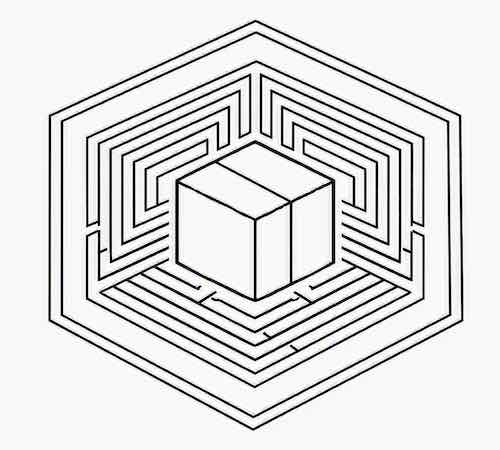
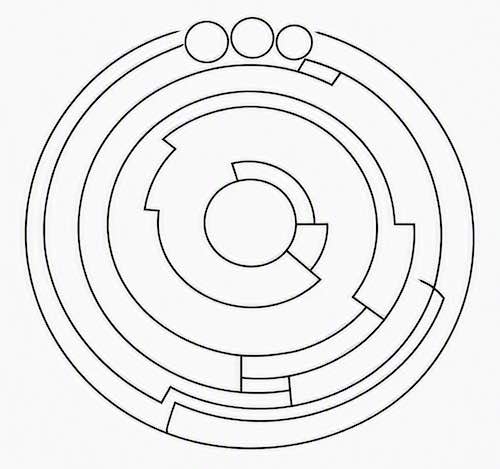
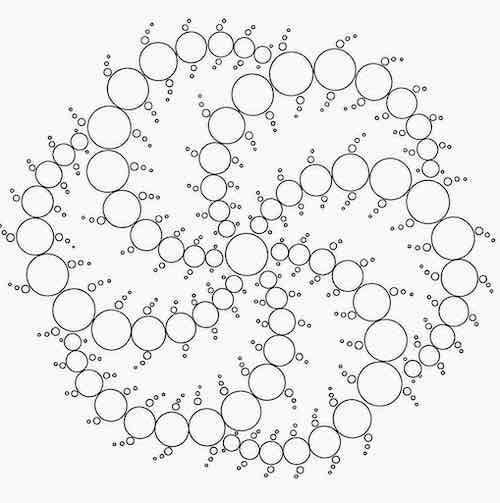
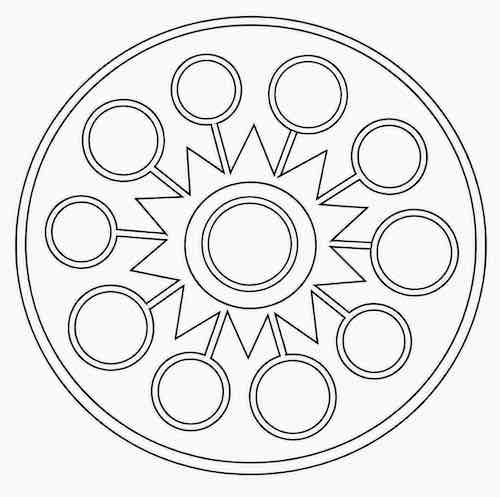
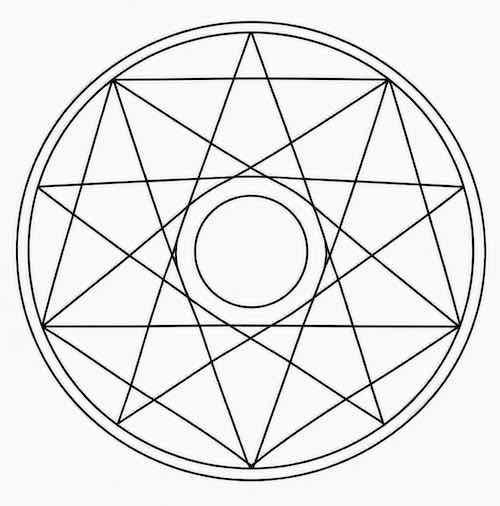
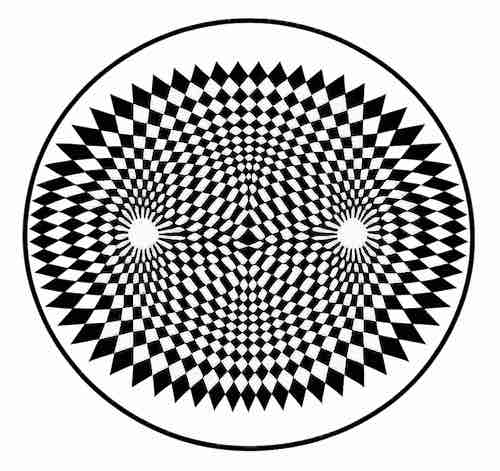
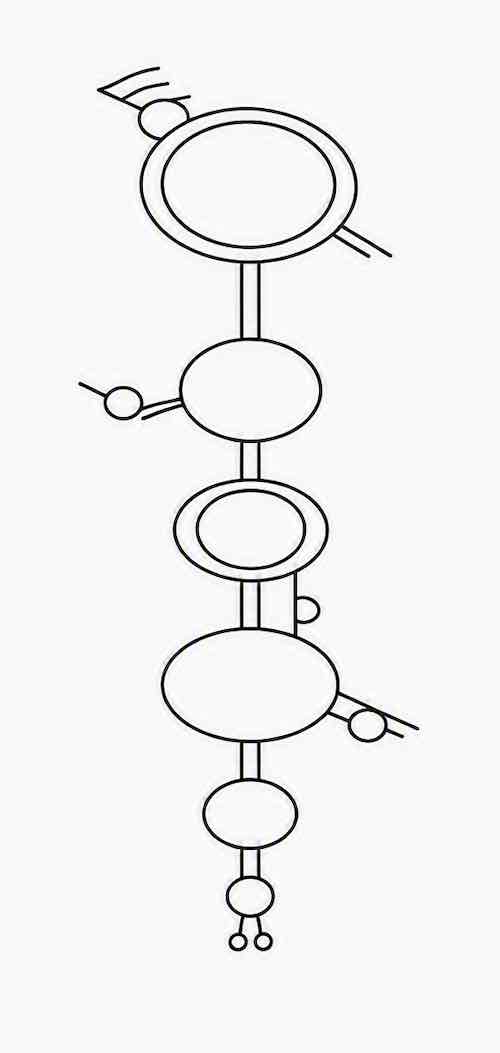
Crop formations can be understood in this way. They are geometric imprints that behave like dimensional projections. Their internal ratios, symmetries, and recursive structures often match the behaviour of higher dimensional curvature. These features are mathematical signatures rather than decorative motifs. They provide a visible trace of the deeper geometry that shapes the bulk. As Erich von Däniken observed, “We see the signs, but we do not understand the message,” and crop formations may represent an example of this situation, where structured information appears before a civilisation that has not yet developed the geometric framework required to interpret it. However, when approached with the assumption that these imprints arise from curvature rather than symbolism, their signatures naturally divide into distinct categories that reflect the curvature modes from which they originate. Each category corresponds to a specific type of manifold in the sixty dimensional bulk. The detailed structure of these categories is presented in Section 1, and the taxonomy provides the foundation for the theory that follows.
The central objective of this document is to design the basis for the construction of a topographical map of higher‑dimensional gravity vectors. This objective unifies all sections that follow. The map is created by analysing geometric seeds, extruding them into sixty dimensions, measuring curvature behaviour, and interpreting the resulting gravitational fields. The map is a representation of how gravity behaves across the bulk, which shows the direction and magnitude of curvature in each region of the manifold, revealing the structure of the deeper geometry that shapes the brane.
A topographical map of higher dimensional gravity vectors would reshape our understanding of the universe in fundamental ways. It would clarify the nature of gravity, illuminate the behaviour of dark matter and dark energy, and reveal how spacetime is structured at a deeper level. The map would also provide the conceptual foundation for technologies that operate through curvature alignment rather than mechanical force. Such technologies could enable controlled interaction with higher dimensional geometry, opening pathways to new forms of energy extraction, communication, and navigation.
The implications extend to the nature of intelligence itself. The map would show that intelligence can exist within the bulk, operating through curvature rather than biological processes. It would demonstrate that intelligent behaviour can move along dimensional pathways instead of physical space and that forms of intelligence may exist that are not bound to the brane.
The document is therefore more than a theoretical exploration. It establishes the conceptual and mathematical tools required to understand higher dimensional geometry and offers an analytical framework for interpreting geometric imprints. It also provides the structural basis for constructing a gravity map and the insight needed to understand the wider implications such a map would have for civilisation.
The sections of the document are arranged in a sequence that moves from geometric foundations to higher‑dimensional physics. Each section contributes a specific part of the overall theory. The list below provides a clear overview of the structure and purpose of each section.
- Section 1 — The Manifold Taxonomy
Introduces the classification system that organises geometric imprints according to the behaviour they produce in the bulk. Defines the seven manifold types and explains how each type corresponds to a distinct curvature mode. - Section 2 — The Mathematics of the Seven Manifolds
Presents the mathematical structure of each manifold type. Defines the metric tensors, curvature behaviour, geodesic families, resonance modes, and boundary conditions that govern their geometry. - Section 3 — The Master Gravity Map
Describes how curvature fields, geodesic networks, attractor landscapes, resonance layers, boundary architectures, and chaotic behaviour are combined into a unified sixty‑dimensional topography. - Section 4 — Projection Into Three Dimensional Space
Explains how higher dimensional curvature becomes visible inside the brane. Shows how induced metrics, Weyl curvature shadows, and gravitational anomalies reveal the signatures of each manifold type. - Section 5 — Visual Interpretation of the Master Gravity Map
Provides the spatial intuition of the master map. Describes how linear corridors, rotational pathways, recursive layers, radial hubs, quantised boundaries, harmonic waves, and chaotic zones appear when the manifold types are layered together. - Section 6 — The Ultimate Horizon
Explores the long‑term implications of higher‑dimensional geometry. Describes the transition from brane‑bound existence to manifold‑integrated intelligence and outlines the future scientific horizon opened by curvature‑based technology.